Merkozy´s letter to "president" van Rompuy is now public and discussed by various pundits. My only comment relates to the the paragraph in the latter that is called "A strengthened institutional architecture".
• Regular summits – at least twice a year - of the Euro area heads of State and Government with a permanent president. These summits will provide strategic orientations on the economic and fiscal policies in the euro area. The impact of our domestic economic and fiscal policies on the euro area should be considered as a matter of common interest, while safeguarding national responsibility.
That means that the European Union (or at least the eurozone) will have yet another permanent president (presumably with a huge staff to assist him - and maybe also a new building to house it). What a wonderfully creative and totally unexpected solution! Although I am not certain that haiku Herman and his colleague, the former maoist Barroso will be thrilled by the prospect of yet another rival arriving on the scene.
Wednesday, 7 December 2011

The European Union in Durban
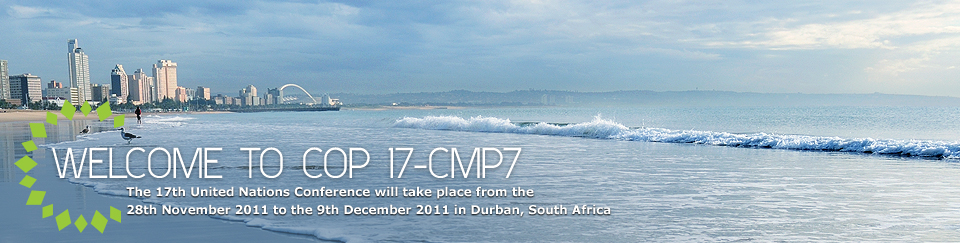
The European Union is, as expected, contributing significantly to make the Durban COP 17 climate change jamboree a success - for airlines offering first and business class flights and the Durban luxury hotels. Nobody will probably know exactly how many official EU
The European Parliament already has a delegation of 15 MEP:s (plus a number of assistants) in Durban, led by the German social democrat Jo Leinen:
Delegation members
Chair Jo Leinen (S&D, DE), Vice-chair Karl-Heinz Florenz (EPP, DE), Kriton Arsenis (S&D, EL), Bairbre De Brún (GUE/NGL, UK), Pilar Del Castillo (EPP, ES), Bas Eickhout (Greens/EFA, NL), Elisabetta Gardini (EPP, IT), Dan Jørgensen (S&D, DK), Corinne Lepage (ALDE, FR), Vladko Panayotov (ALDE, BG), Anna Rosbach (ECR, DK), Oreste Rossi (EFD, IT), Richard Seeber (EPP, AT), Francisco Sosa Wagner (unattached, ES) and Marita Ulvskog (S&D, SE)
The MEP:s will certainly have excellent opportunities to enjoy "side events" on the beach - their official Durban schedule does not appear to be overwhelming:
In their Durban programme, MEPs will discuss negotiations with the Commission and Polish Presidency, meet counterparts from other parliaments (Japan, South Africa and Mexico), as well as local and international NGO representatives.
The taxpayers of Europe wish the European Parliament delegation a nice stay in Durban! Don´t forget the sun tan lotion!
Fighting "climate change" in Papua New Guinea - courtesy of Australian taxpayers
The European Union, the US and many other governments are spending millions and millions of euros and dollars on "fighting climate change" in many of the world´s poor areas. Here is an example of what has been achieved, in this case through the generosity of the Australian taxpayers (via AUSaid):
PS
The playing and singing is not at all bad, but hopefully the AUSaid team will provide the group with some more interesting lyrics ...
How about e.g. Waltzing Matilda?
China´s communist rulers trying to find "a complete mechanism for social management" against protests
The number of strikes and protests are increasing in China, and the countries communist rulers do not seem to know what to do. So far their main approach to the growing problem has been the usual one - ordering the country´s wast security machinery to clamp down on the protesters by using force. The corrupted ruling elite may succeed in this for a while, but when the number of protests keeps growing, the likelyhood that the rulers will find "a complete mechanism for social management,” is not very great .....
Tens of thousands of factory workers in southern Guangdong province employed in the footwear, garment, watchmaking, furniture and electronics industries have taken strike action in recent weeks. Public and municipal sector workers have also taken strike action in Nanjing (public sanitation workers) and Shanghai (public hospital staff). In the Sichuan capital, Chengdu, several hundred state-owned enterprise (SOE) workers staged a three-day (28-30 November) sit-in protest over a share distribution plan following privatisation of the factory.
Around 100 staff blocked and barricaded a supermarket owned by British chain Tesco in the Zhejiang city of Jinhua. The store is to close and workers are fighting for unpaid wages. Bus drivers and taxi drivers have been involved in separate stoppages over low pay and unfair competition in Shandong, Hainan and Guangxi provinces.
Some recent strikes “showed a new level of sophistication” according to Geoffrey Crothall, a commentator for the Hong Kong-based China Labour Bulletin. A good example of this is the coordinated one-day strike by several thousand workers at five of PepsiCo’s 24 plants. The workers – at factories in Chongqing, Chengdu, Fuzhou, Lanzhou and Nanchang – protested last month at PepsiCo’s decision to sell its China arm to Taiwanese-owned Tingyi, fearing that existing terms and conditions of work will be undermined by the deal.
PepsiCo workers made use of weibo micro-blogging sites to publicise their dispute, again underlining a high degree of planning and coordination, which is sorely needed in the struggle for workers’ rights in China. So afraid were the authorities of this example, that ‘Pepsi’ was added to the list of blocked words on internet search engines.
Police and local government officials have generally taken a tough line towards recent disputes, as in the case of the Hi-P strike in Shanghai. Ten workers at the huge Yucheng shoe factory in Dongguan were injured when police cracked down on a protest march involving thousands last month (see: Upsurge of strikes in southern China).
The recent upturn in strikes has sounded alarm bells within the summits of the ‘communist’ dictatorship. Zhou Yongkang, China’s top security official, warned earlier this week about the spectre of social unrest arising due to the state of the economy.
“Especially when facing the negative effects of the market economy, we still have not formed a complete mechanism for social management,” Zhou said. How to do so, he said, “is the great and urgent task before us.”
Read the entire article here
(The site is not exactly my cup of tea, but on this subject I think their reporting is sound)
Tens of thousands of factory workers in southern Guangdong province employed in the footwear, garment, watchmaking, furniture and electronics industries have taken strike action in recent weeks. Public and municipal sector workers have also taken strike action in Nanjing (public sanitation workers) and Shanghai (public hospital staff). In the Sichuan capital, Chengdu, several hundred state-owned enterprise (SOE) workers staged a three-day (28-30 November) sit-in protest over a share distribution plan following privatisation of the factory.
Around 100 staff blocked and barricaded a supermarket owned by British chain Tesco in the Zhejiang city of Jinhua. The store is to close and workers are fighting for unpaid wages. Bus drivers and taxi drivers have been involved in separate stoppages over low pay and unfair competition in Shandong, Hainan and Guangxi provinces.
Some recent strikes “showed a new level of sophistication” according to Geoffrey Crothall, a commentator for the Hong Kong-based China Labour Bulletin. A good example of this is the coordinated one-day strike by several thousand workers at five of PepsiCo’s 24 plants. The workers – at factories in Chongqing, Chengdu, Fuzhou, Lanzhou and Nanchang – protested last month at PepsiCo’s decision to sell its China arm to Taiwanese-owned Tingyi, fearing that existing terms and conditions of work will be undermined by the deal.
PepsiCo workers made use of weibo micro-blogging sites to publicise their dispute, again underlining a high degree of planning and coordination, which is sorely needed in the struggle for workers’ rights in China. So afraid were the authorities of this example, that ‘Pepsi’ was added to the list of blocked words on internet search engines.
Police and local government officials have generally taken a tough line towards recent disputes, as in the case of the Hi-P strike in Shanghai. Ten workers at the huge Yucheng shoe factory in Dongguan were injured when police cracked down on a protest march involving thousands last month (see: Upsurge of strikes in southern China).
The recent upturn in strikes has sounded alarm bells within the summits of the ‘communist’ dictatorship. Zhou Yongkang, China’s top security official, warned earlier this week about the spectre of social unrest arising due to the state of the economy.
“Especially when facing the negative effects of the market economy, we still have not formed a complete mechanism for social management,” Zhou said. How to do so, he said, “is the great and urgent task before us.”
Read the entire article here
(The site is not exactly my cup of tea, but on this subject I think their reporting is sound)
The euro crisis: Waiting for December 9
While we are waiting for yet another "summit" - the one on December 9 - in the endless line of EU crisis meetings, I thought it might be interesting to highlight these two interesting comments:
D.K. Matai writing in the Market Oracle:
Germany's Next Move
Dr Merkel also wants to rewrite the euro rulebook by reopening the Lisbon Treaty, meaning a negotiation amongst all 27 EU states that would also involve the European parliament and the European commission. Given the enormous complexity of this proposed reformation, coupled with the existential crisis of the Eurozone at present, this would suggest that the entire process may not be achieved in time to save the euro and is therefore utterly implausible. Given the German reputation for "gründlichkeit" or thoroughness, is Germany really preparing for something else? Is all of this just a big red herring? Reliable media sources have already published reports that Germany has contingency plans in place to exit the Eurozone quickly and resurrect the Deutschemark including the issuance of paper currency.
Designed to Fail
Many distinguished members of the ATCA 5000 have expressed grave reservations in private in regard to the solidity, viability and sincerity of the German proposals because they appear at one level to be designed to fail. The failure of adoption of the German plans across the Eurozone member nations could feasibly be construed by Germany as a justification for their exit. As a result, Germany could attempt to abandon the euro and resurrect the Deutschemark without incurring blame. They could even turn around and claim that they have clean hands and it was a fault of the weaker members of the Eurozone that various nations refused to participate in full financial integration that would have paved the way to save the Eurozone. Thus, all blame could be cast on the weaker members of the Eurozone.
We will have to wait and see, but I think the above scenario has something to it. What you see is in politics often not what you will get.
Russ Roberts on Cafe Hajek also has a good point:
On my exercise bike at the gym the other day, I caught a snippet of the Stuart Varney Show. Three guests were discussing the European crisis. John Stossel argued for letting market forces work–if I remember correctly, he wanted those banks that had lent money to Greece and Italy and Spain to bear costs, possibly severe costs like losing their money. One of the guests (I don’t know who it was) strongly disagreed. His argument was that Stossel’s solution would lead to the apocalypse. That was his argument. We risked the end of civilization–banks could go broke leading to a depression and then we’d all be worse off. Varney agreed. Stossel’s idea of market discipline was simply too dangerous.
Stossel gave a good answer. He said but what if we get the apocalypse anyway? Maybe all we’re doing is kicking the can down the road and making the reckoning even worse than it otherwise would be. His answer is made more powerful by recent history. In 2008, we rescued the creditors relentlessly that helped pave the way for this crisis. What will the next one look like?
I have a different problem with the apocalypse argument. How do you know if it’s true? Where’s the evidence that letting banks lose some, or most or even all of the money they unwisely lent or invested in bonds is going to lead to a disaster? Where are the data that make this claim credible other than a bald assertion?
But I have an even bigger problem with the apocalypse argument. If the threat of banks taking a haircut risks the apocalypse then we may as well admit the game is over. Just give the banks our wallets and checkbooks and go home. It’s the end of capitalism and the end of democracy. I’d prefer an apocalypse.
D.K. Matai writing in the Market Oracle:
Germany's Next Move
Dr Merkel also wants to rewrite the euro rulebook by reopening the Lisbon Treaty, meaning a negotiation amongst all 27 EU states that would also involve the European parliament and the European commission. Given the enormous complexity of this proposed reformation, coupled with the existential crisis of the Eurozone at present, this would suggest that the entire process may not be achieved in time to save the euro and is therefore utterly implausible. Given the German reputation for "gründlichkeit" or thoroughness, is Germany really preparing for something else? Is all of this just a big red herring? Reliable media sources have already published reports that Germany has contingency plans in place to exit the Eurozone quickly and resurrect the Deutschemark including the issuance of paper currency.
Designed to Fail
Many distinguished members of the ATCA 5000 have expressed grave reservations in private in regard to the solidity, viability and sincerity of the German proposals because they appear at one level to be designed to fail. The failure of adoption of the German plans across the Eurozone member nations could feasibly be construed by Germany as a justification for their exit. As a result, Germany could attempt to abandon the euro and resurrect the Deutschemark without incurring blame. They could even turn around and claim that they have clean hands and it was a fault of the weaker members of the Eurozone that various nations refused to participate in full financial integration that would have paved the way to save the Eurozone. Thus, all blame could be cast on the weaker members of the Eurozone.
We will have to wait and see, but I think the above scenario has something to it. What you see is in politics often not what you will get.
Russ Roberts on Cafe Hajek also has a good point:
On my exercise bike at the gym the other day, I caught a snippet of the Stuart Varney Show. Three guests were discussing the European crisis. John Stossel argued for letting market forces work–if I remember correctly, he wanted those banks that had lent money to Greece and Italy and Spain to bear costs, possibly severe costs like losing their money. One of the guests (I don’t know who it was) strongly disagreed. His argument was that Stossel’s solution would lead to the apocalypse. That was his argument. We risked the end of civilization–banks could go broke leading to a depression and then we’d all be worse off. Varney agreed. Stossel’s idea of market discipline was simply too dangerous.
Stossel gave a good answer. He said but what if we get the apocalypse anyway? Maybe all we’re doing is kicking the can down the road and making the reckoning even worse than it otherwise would be. His answer is made more powerful by recent history. In 2008, we rescued the creditors relentlessly that helped pave the way for this crisis. What will the next one look like?
I have a different problem with the apocalypse argument. How do you know if it’s true? Where’s the evidence that letting banks lose some, or most or even all of the money they unwisely lent or invested in bonds is going to lead to a disaster? Where are the data that make this claim credible other than a bald assertion?
But I have an even bigger problem with the apocalypse argument. If the threat of banks taking a haircut risks the apocalypse then we may as well admit the game is over. Just give the banks our wallets and checkbooks and go home. It’s the end of capitalism and the end of democracy. I’d prefer an apocalypse.
Tuesday, 6 December 2011
The beginning of the end for Putin
More and more Russians have had enough of Vladimir Putin´s corrupted regime of thugs. Putin has answered in the same way as all dictators - by arresting peaceful demonstrators:
Russian riot police have arrested hundreds of activists in central Moscow to stop a new protest alleging that elections were rigged in favour of Vladimir Putin's ruling party.
Helmeted police in green camouflage and interior ministry troops deployed in force for an event that was organised through the internet after a rare thousands-strong protest on Monday startled the authorities.
Opposition supporters shouted "Shame on you fascists" and "Russia without Putin" in a tense stand-off with hundreds of pro-Kremlin youth who descended on the site in advance.
Read the entire article here
Putin should know - and he probably does know - that this the beginning of the end of his regime. He may be able to stay on for a while with the help of his corrupted and brutal security machinery, but sooner or later he will be forced out.
PS
US senator John McCain, a leading critic of Putin, today tweeted this (according to FT):
“Dear Vlad [prime minister Vladimir Putin], the Arab spring is coming to a neighbourhood near you”.
And this is the prediction of Yulia Latynina, writing in the Moscow Times:
"Putin´s system is disintegrating with frightening speed. My guess is that it won´t survive until the next elections."
Is there global warming on the "new Earth"?
NASA has found a "new Earth":
A newly discovered planet is eerily similar to Earth and is sitting outside our solar system in what seems to be the ideal place for life, except for one hitch. It’s a bit too big.
The planet is smack in the middle of what astronomers call the Goldilocks zone, that hard to find place that’s not too hot, not too cold, where water, which is essential for life, doesn’t freeze or boil. And it has a shopping mall-like surface temperature of near 72 degrees, scientists say.
The new planet — named Kepler-22b — has key aspects it shares with Earth. It circles a star that could be the twin of our sun and at just about the same distance. The planet’s year of 290 days is even close to ours. It likely has water and rock.
--
The planet is 600 light years away. Each light year is 5.9 trillion miles. It would take a space shuttle about 22 million years to get there.
Read the entire article here
PS
Congrulations to NASA. Hopefully NASA did not use James Hansen to measure the "shopping mall-like temperature of near 72". On the other hand, we would all benefit if Hansen from now on would switch to fighting "global warming" on Kepler-22b.
A newly discovered planet is eerily similar to Earth and is sitting outside our solar system in what seems to be the ideal place for life, except for one hitch. It’s a bit too big.
The planet is smack in the middle of what astronomers call the Goldilocks zone, that hard to find place that’s not too hot, not too cold, where water, which is essential for life, doesn’t freeze or boil. And it has a shopping mall-like surface temperature of near 72 degrees, scientists say.
The new planet — named Kepler-22b — has key aspects it shares with Earth. It circles a star that could be the twin of our sun and at just about the same distance. The planet’s year of 290 days is even close to ours. It likely has water and rock.
--
The planet is 600 light years away. Each light year is 5.9 trillion miles. It would take a space shuttle about 22 million years to get there.
Read the entire article here
PS
Congrulations to NASA. Hopefully NASA did not use James Hansen to measure the "shopping mall-like temperature of near 72". On the other hand, we would all benefit if Hansen from now on would switch to fighting "global warming" on Kepler-22b.
Less than 10% of the Swedes want the euro

Sweden is not going to join the euro countries anytime soon, that´s for sure. Less than 10% of the Swedes think that their country should adopt the crisis-ridden European currency, according to a new opinion poll. This is a record low, according to the Swedish daily Svenska Dagbladet.
Anybody surprised?
Durban COP 17: In praise of India

"India was the motherland of our race, and Sanskrit the mother of Europe's languages: she was the mother of our philosophy; mother, through the Arabs, of much of our mathematics; mother, through the Buddha, of the ideals embodied in Christianity; mother, through the village community, of self-government and democracy. Mother India is in many ways the mother of us all".
Will Durant
The Independent reports from Durban that India is now the leading opponent of a "new comprehensive global-warming treaty":
The Indians are refusing to approve anything that might put a brake on their economy, now expanding with growth in 2010 estimated at 10.4 per cent. Its carbon emissions are growing at more than 9 per cent a year, the fastest of any major nation, and the country has shot up to become the world's third biggest carbon emitter, after China and the US.
But the Indians are relying on this growth to take hundreds of millions of their nearly 1.2 billion people out of poverty and they want nothing to do with curbing these emissions.
Instead, along with some other emerging economies, India is seeking a renewal of the Kyoto Protocol, the 1997 climate agreement due to run out next year under which Western industrialised countries agreed to make reductions in their emissions of greenhouse gases, while developing countries such as China and India had no obligations to make cuts at all.
India has to be congrutaled for its wise policy. That India supports a renewal of the Kyoto Protocol is not surprising, either. Why should India - and other developing countries - want to oppose this self-inflicted madness that is seriously hurting the economies of its competitors, the western industrialised countries?
(image by Wikipedia)
Monday, 5 December 2011
The new Libya "wildly ambitious" in Durban
Flashback 2007:
Luckily, madman Gaddafi and his sons have been replaced by other people. But whether this new Libyan "project" is much more realistic than the 2007 undertaking, remains to be seen:
Libya is wildly ambitious and clearly already trying to revolutionise thinking on climate change and science. It plans a monster geoengineering project that would not just cool the Earth by 6C and cut carbon dioxide emissions to zero by 2021, it says, but would reverse global warming, provide power for 2 billion people, lower sea levels and restore the climate of 1750. Wow. How, you ask? Easily, says Muftah Elarbash, who describes himself as a Libyan environmental engineer who is on the delegation. He wants to build, at a cost of around $45 trillion, several dozen giant, 15km wide "venting towers" to create constant winds in the desert to drive massive windfarms which would then electrify the world. "Once that is done the maximum ambient temperature of 26.2C will be reached in 2020 - 6C below the catastrophic threshold temperature of 32". He reckons that by 2080 the climate will be back to that seen in 1750.
Read the entire article here
PS
I would not be surprised if the Prince of Wales and Sir Nicholas Stern would lend their support also to this new Libyan fantasy project.
The Libyan government has announced the creation of what it claims is "the world’s first sustainable region". It’s backed by architects Foster and Partners, enthusiastically endorsed by Sir Nicholas Stern – and directed by the Colonel’s son, Saif al-Islam Gaddafi.
The Green Mountain Conservation and Development Authority (GMCDA) will cover the northeastern region of Jabal al Akhdar (literally, ‘Green Mountain’). This encompasses several of the country’s major cities, including Benghazi, and stretches from the coast inland to a plateau featuring junipers, cypresses and wild olives. According to Norman Foster, it’s "one of the most beautiful and little known landscapes on earth"…
Sir Nicholas Stern… has given his blessing: "If we are to avoid the catastrophic effects of climate change… we need urgently to build new economic and social models of development on a substantial scale. The GMCDA will show how environmental and cultural objectives can help to build a thriving and sustainable local economy in a crucial part of the world." Among other organisations involved are UNESCO, WWF and the Prince of Wales School of Traditional Arts.
Luckily, madman Gaddafi and his sons have been replaced by other people. But whether this new Libyan "project" is much more realistic than the 2007 undertaking, remains to be seen:
Libya is wildly ambitious and clearly already trying to revolutionise thinking on climate change and science. It plans a monster geoengineering project that would not just cool the Earth by 6C and cut carbon dioxide emissions to zero by 2021, it says, but would reverse global warming, provide power for 2 billion people, lower sea levels and restore the climate of 1750. Wow. How, you ask? Easily, says Muftah Elarbash, who describes himself as a Libyan environmental engineer who is on the delegation. He wants to build, at a cost of around $45 trillion, several dozen giant, 15km wide "venting towers" to create constant winds in the desert to drive massive windfarms which would then electrify the world. "Once that is done the maximum ambient temperature of 26.2C will be reached in 2020 - 6C below the catastrophic threshold temperature of 32". He reckons that by 2080 the climate will be back to that seen in 1750.
Read the entire article here
PS
I would not be surprised if the Prince of Wales and Sir Nicholas Stern would lend their support also to this new Libyan fantasy project.
Sunday, 4 December 2011
A tale of two Chinas
A tale of two Chinas:
China’s consumption of luxury goods is on the rise, amounting to $10.7 billion or 25 percent of the global luxury market.
Wang Ning, a professor of sociology at Sun Yat-Sen University in Guangdong Province told Sound of Hope Radio that he sees China’s luxury consumption as part of a black market, because the sources of the income used for such purchases are not transparent and do not come from legal sources.
---
“In the Chinese power cycle, one’s authority is evaluated by the gifts one receives,” the sociologist Wang told Guangzhou Daily. “Louis Vuitton is the most recognizable luxury brand in China and thus becomes the symbol of authority.”
In China, if one wants to climb the corporate ladder, one must kowtow to one’s supervisor. If one wants to do business, one must have support from state officials. Businesses bribing state officials and businesses conspiring with officials have become very common.
East China Normal University law professor Dai Keting told Oriental Outlook magazine that corrupt officials are not only the end consumers but also the driving force of luxury goods consumption in China.
In recent years, many reports about corrupt officials have listed the luxury brands they have received as bribes. A reporter from Legal Evening News did a survey of 100 local bribery cases between 2005 and 2007 and found that small luxury goods, followed by cars and houses, are among the most popular bribes.
In 2008, the former Director of Fushun City’s Land Planning Bureau Jiang Runli was charged with corruption. It was discovered that 55-year-old Jiang owned six different pieces of real estate, 253 different luxury handbags, 1,246 items of designer clothing, over 600 pieces of jewelry, and 48 luxury watches.
Read the entire article here
Commentary 2:
Rich Chinese buy cars for cash and want to have all the luxury goods that they can get. Therefore, China is now the third largest market for e.g. Daimler – a company which is included in more of Danske Invest’s European portfolios.
When the Chinese who can afford expensive cars are buying a new Mercedes, they to not hold back. They want the luxury version with the largest motor together with all the extra equipment that they can get – and when it comes to that, they are different from the more “modest” car buyers in Europe and the USA.
Within a very short period of time, China has become the third largest market for German car producers. And the most profitable market. This is so precisely because the cars are sold in the most expensive versions here.
“Both Mercedes and BMW are experiencing increasing sales in China. During the first half of 2011, the Chinese have bought approx. 50% more Mercedes cars than during the first half year 2010," says Asger Lund Nielsen from Danske Capital. He is providing investment advice for Danske Invest on European car stocks. In his view, China will become an even larger market for e.g. Daimler - who stands behind the Mercedes-brand - in step with the increasing number of wealthy Chinese.
Read the entire article here
PS
China´s luxury consumtion - "part of a black market, because the sources of the income used for such purchases are not transparent and do not come from legal sources" - seems to be a main driver of the German export "miracle". At the same time China is flooding the West with Christmas decorations, toys and other products made in slave labour camps.
Not a very pleasant development.
The "secret" behind German and other luxury brands´ extraordinary export success in China?
The other side of the coin
Commentary 1:China’s consumption of luxury goods is on the rise, amounting to $10.7 billion or 25 percent of the global luxury market.
Wang Ning, a professor of sociology at Sun Yat-Sen University in Guangdong Province told Sound of Hope Radio that he sees China’s luxury consumption as part of a black market, because the sources of the income used for such purchases are not transparent and do not come from legal sources.
---
“In the Chinese power cycle, one’s authority is evaluated by the gifts one receives,” the sociologist Wang told Guangzhou Daily. “Louis Vuitton is the most recognizable luxury brand in China and thus becomes the symbol of authority.”
In China, if one wants to climb the corporate ladder, one must kowtow to one’s supervisor. If one wants to do business, one must have support from state officials. Businesses bribing state officials and businesses conspiring with officials have become very common.
East China Normal University law professor Dai Keting told Oriental Outlook magazine that corrupt officials are not only the end consumers but also the driving force of luxury goods consumption in China.
In recent years, many reports about corrupt officials have listed the luxury brands they have received as bribes. A reporter from Legal Evening News did a survey of 100 local bribery cases between 2005 and 2007 and found that small luxury goods, followed by cars and houses, are among the most popular bribes.
In 2008, the former Director of Fushun City’s Land Planning Bureau Jiang Runli was charged with corruption. It was discovered that 55-year-old Jiang owned six different pieces of real estate, 253 different luxury handbags, 1,246 items of designer clothing, over 600 pieces of jewelry, and 48 luxury watches.
Read the entire article here
Commentary 2:
Rich Chinese buy cars for cash and want to have all the luxury goods that they can get. Therefore, China is now the third largest market for e.g. Daimler – a company which is included in more of Danske Invest’s European portfolios.
When the Chinese who can afford expensive cars are buying a new Mercedes, they to not hold back. They want the luxury version with the largest motor together with all the extra equipment that they can get – and when it comes to that, they are different from the more “modest” car buyers in Europe and the USA.
Within a very short period of time, China has become the third largest market for German car producers. And the most profitable market. This is so precisely because the cars are sold in the most expensive versions here.
“Both Mercedes and BMW are experiencing increasing sales in China. During the first half of 2011, the Chinese have bought approx. 50% more Mercedes cars than during the first half year 2010," says Asger Lund Nielsen from Danske Capital. He is providing investment advice for Danske Invest on European car stocks. In his view, China will become an even larger market for e.g. Daimler - who stands behind the Mercedes-brand - in step with the increasing number of wealthy Chinese.
Read the entire article here
PS
China´s luxury consumtion - "part of a black market, because the sources of the income used for such purchases are not transparent and do not come from legal sources" - seems to be a main driver of the German export "miracle". At the same time China is flooding the West with Christmas decorations, toys and other products made in slave labour camps.
Not a very pleasant development.
Saturday, 3 December 2011
The IPCC falsified satellite altimetry: "“We had to do so, otherwise there would be no trend.”
Dr. Nils Axel Mörner, former president of the INQUA Commission on Sea Level Changes and Coastal Evolution, again debunks the IPCC myth about rising sea levels in an article published by the Deccan Chronicle. The IPCC has according to Mörner e.g. dishonestly altered satellite altimetry upwards to imply a sudden rise level rise in 2003.
And now the IPCC is promoting its fake "science" at the Durban COP 17 conference:
This year’s focus is on a familiar and certainly arresting argument: that sea levels are rising at a catastrophic and unprecedented rate mainly due to man-made global warming.
No one makes this point with quite so much panache as Mohamed Nasheed, President of the Maldives. In the run-up to the summit, he declared that he leads “an island nation that may slip beneath the waves if all this talk on climate does not lead to action soon”.
Since chairing a meeting of his Cabinet underwater, Nasheed has been busy rallying other low-lying countries to make similar points. He chaired a summit of them in Bangladesh, to compare notes ahead of the Durban summit, and they agree to limit their own carbon emissions.
Ban Ki-moon, the head of the United Nations, was delighted — saying that it was unfair to ask “the poorest and most vulnerable to bear the brunt of the impact of climate change alone” and called for them to be given subsidies by richer countries to adapt. Such funds do not seem to be forthcoming. It seems the summit in Durban will, like so many climate summits, be disappointing.
I may be able to help. As someone with some expertise in the field, I can assure the low-lying countries that this is a false alarm. The sea is not rising precipitously. I have studied many of the low-lying regions in my 45-year career, recording and interpreting sea level data.
I have conducted six field trips to the Maldives; I have been to Bangladesh, whose environment minister was claiming that flooding due to climate change threatened to create in her country 20 million “ecological refugees”. I have carefully examined the data of “drowning” Tuvalu. And I can report that, while such regions do have problems, they need not fear rising sea levels.
My latest project was a field expedition to India, to the coast of Goa, combining observations with archeological information. Our findings are straightforward: there is no ongoing sea level rise.
The sea level there has been stable for the last 50 years or so, after falling some 20cm in around 1960; it was well below the present level in the 18th century and some 50 to 60cm above the present in the 17th century. So it is clear that sea levels rise and fall entirely independently of so-called “climate change”.
Dr. Mörner then compares the facts with the IPCC´s version:
This is nonsense. The world’s true experts on sea level are to be found at the International Union for Quaternary Reseach (INQUA) commission on Sea Level Changes and Coastal Evolution, not at the IPCC. Our research is what the climate lobby might call an “inconvenient truth”: it shows that sea levels have been oscillating close to the present level for the last three centuries.
So any of the troubles attributed to “rising sea levels” must instead be the result of other, local factors and basic misinterpretation. In Bangladesh, for example, increased salinity in the rivers has in fact been caused by dams in the Ganges, which have decreased the outflow of fresh water.
The IPCC’s Fourth Assessment claimed that “there is strong evidence” of sea level rising over the last few decades. It goes as far as to claim: “Satellite observations available since the early 1990s provide more accurate sea level data... This decade-long satellite altimetry data set shows that since 1993, sea level has been rising at a rate of around 3mm yr–1, significantly higher than the average during the previous half century.”
Almost every word of this is untrue. Satellite altimetry is a wonderful and vital new technique that offers the reconstruction of sea level changes all over the ocean surface. But it has been hijacked and distorted by the IPCC for political ends.
In 2003 the satellite altimetry record was mysteriously tilted upwards to imply a sudden sea level rise rate of 2.3mm per year. When I criticised this dishonest adjustment at a global warming conference in Moscow, a British member of the IPCC delegation admitted in public the reason for this new calibration: “We had to do so, otherwise there would be no trend.”
This is a scandal that should be called Sealevelgate.
Read the entire article here
And now the IPCC is promoting its fake "science" at the Durban COP 17 conference:
This year’s focus is on a familiar and certainly arresting argument: that sea levels are rising at a catastrophic and unprecedented rate mainly due to man-made global warming.
No one makes this point with quite so much panache as Mohamed Nasheed, President of the Maldives. In the run-up to the summit, he declared that he leads “an island nation that may slip beneath the waves if all this talk on climate does not lead to action soon”.
Since chairing a meeting of his Cabinet underwater, Nasheed has been busy rallying other low-lying countries to make similar points. He chaired a summit of them in Bangladesh, to compare notes ahead of the Durban summit, and they agree to limit their own carbon emissions.
Ban Ki-moon, the head of the United Nations, was delighted — saying that it was unfair to ask “the poorest and most vulnerable to bear the brunt of the impact of climate change alone” and called for them to be given subsidies by richer countries to adapt. Such funds do not seem to be forthcoming. It seems the summit in Durban will, like so many climate summits, be disappointing.
I may be able to help. As someone with some expertise in the field, I can assure the low-lying countries that this is a false alarm. The sea is not rising precipitously. I have studied many of the low-lying regions in my 45-year career, recording and interpreting sea level data.
I have conducted six field trips to the Maldives; I have been to Bangladesh, whose environment minister was claiming that flooding due to climate change threatened to create in her country 20 million “ecological refugees”. I have carefully examined the data of “drowning” Tuvalu. And I can report that, while such regions do have problems, they need not fear rising sea levels.
My latest project was a field expedition to India, to the coast of Goa, combining observations with archeological information. Our findings are straightforward: there is no ongoing sea level rise.
The sea level there has been stable for the last 50 years or so, after falling some 20cm in around 1960; it was well below the present level in the 18th century and some 50 to 60cm above the present in the 17th century. So it is clear that sea levels rise and fall entirely independently of so-called “climate change”.
Dr. Mörner then compares the facts with the IPCC´s version:
But the IPCC’s Fourth Assessment Report (2007) tells a different story: “Even under the most conservative scenario, sea level will be about 40cm higher than today by the end of 21st century and this is projected to increase the annual number of people flooded in coastal populations from 13 million to 94 million. Almost 60 per cent of this increase will occur in South Asia.”
This is nonsense. The world’s true experts on sea level are to be found at the International Union for Quaternary Reseach (INQUA) commission on Sea Level Changes and Coastal Evolution, not at the IPCC. Our research is what the climate lobby might call an “inconvenient truth”: it shows that sea levels have been oscillating close to the present level for the last three centuries.
This is not due to melting glaciers: sea levels are affected by a great many factors, such as the speed at which the earth rotates. They rose in the order of 10 to 11cm between 1850 and 1940, stopped rising or maybe even fell a little until 1970, and have remained roughly flat ever since.
So any of the troubles attributed to “rising sea levels” must instead be the result of other, local factors and basic misinterpretation. In Bangladesh, for example, increased salinity in the rivers has in fact been caused by dams in the Ganges, which have decreased the outflow of fresh water.
The IPCC’s Fourth Assessment claimed that “there is strong evidence” of sea level rising over the last few decades. It goes as far as to claim: “Satellite observations available since the early 1990s provide more accurate sea level data... This decade-long satellite altimetry data set shows that since 1993, sea level has been rising at a rate of around 3mm yr–1, significantly higher than the average during the previous half century.”
Almost every word of this is untrue. Satellite altimetry is a wonderful and vital new technique that offers the reconstruction of sea level changes all over the ocean surface. But it has been hijacked and distorted by the IPCC for political ends.
In 2003 the satellite altimetry record was mysteriously tilted upwards to imply a sudden sea level rise rate of 2.3mm per year. When I criticised this dishonest adjustment at a global warming conference in Moscow, a British member of the IPCC delegation admitted in public the reason for this new calibration: “We had to do so, otherwise there would be no trend.”
This is a scandal that should be called Sealevelgate.
Read the entire article here
Only 12 heads of state attending COP 17 in Durban
Not more than twelve heads of state or government are joining the thousands of climate tourists delegates attending the COP 17 climate change jamboree in Durban, according to the latest information:
Durban - Twelve heads of government and state have said they will participate in UN climate talks in Durban, UN climate chief Christiana Figueres said on Friday.
African leaders from the Central African Republic, Ethiopia, Gabon, the Republic of Congo and Senegal are set to attend the 12-day talks which wrap up on December 9, Figueres said.
Nauru, Honduras, Samoa, Monaco, Fiji, Niue and Norway will also be represented by their heads of state.
Well, Norway´s prime minister Stoltenberg really must be looking forward to joining this exclusive group of world leaders from such beacons of democracy and human rights as Ethiopia, the Central African Republic, the Republic of Congo, Gabon, Fiji and Honduras ....
In addition, Stoltenberg will have an excellent opportunity to discuss climate change - and perhaps the profitability of the Casino in this adverse economic climate - with Monaco´s head of State, former playboy turned climate activist, Prince Albert II.
Durban - Twelve heads of government and state have said they will participate in UN climate talks in Durban, UN climate chief Christiana Figueres said on Friday.
African leaders from the Central African Republic, Ethiopia, Gabon, the Republic of Congo and Senegal are set to attend the 12-day talks which wrap up on December 9, Figueres said.
Nauru, Honduras, Samoa, Monaco, Fiji, Niue and Norway will also be represented by their heads of state.
Well, Norway´s prime minister Stoltenberg really must be looking forward to joining this exclusive group of world leaders from such beacons of democracy and human rights as Ethiopia, the Central African Republic, the Republic of Congo, Gabon, Fiji and Honduras ....
In addition, Stoltenberg will have an excellent opportunity to discuss climate change - and perhaps the profitability of the Casino in this adverse economic climate - with Monaco´s head of State, former playboy turned climate activist, Prince Albert II.
Swedish journalist: Vladimir Putin is a criminal
The Moscow correspondent of the Swedish quality daily Svenska Dagbladet confirms earlier reports - also reported on this blog - that Russia´s de facto dictator and future life time president, Vladimir Putin, is a criminal, who has become one of the richest men in Europe through corruption and bribery. In a chat one reader asked the correspondent Jan Blomgren, whether Putin is a criminal. Here is Blomgren´s reply:
Yes, that is what I believe. I would be surprised if Putin is not one of Europe´s richest men, and in that case it´s not his official salary which is behind his wealth. The rumours linking Putin to corruption, bribery and unlawful takeovers of companies surfaced already during his time as assistent to Sobtjak, the mayor of St. Petersburg in the beginning of the 1990´s. Putin´s position as the official responsible for foreign trade in St. Petersburg gave him undreamed-of possibilites "na leva" (to the left). As president from the year 2000 he has then had all the opportunities to enrich himself, his relatives and friends at the expense of either the Russian state or stateowned companies.
Yes, that is what I believe. I would be surprised if Putin is not one of Europe´s richest men, and in that case it´s not his official salary which is behind his wealth. The rumours linking Putin to corruption, bribery and unlawful takeovers of companies surfaced already during his time as assistent to Sobtjak, the mayor of St. Petersburg in the beginning of the 1990´s. Putin´s position as the official responsible for foreign trade in St. Petersburg gave him undreamed-of possibilites "na leva" (to the left). As president from the year 2000 he has then had all the opportunities to enrich himself, his relatives and friends at the expense of either the Russian state or stateowned companies.
 |
| Putin, here together with his friend and supporter, former German chancellor Gerhard Schröder PS It can be extremely profitable to be close to Putin. Vladimir Putin's right-hand man Igor Shuvalov is a rising star in Russian politics. He's also made a lot of money since joining the government: While Shuvalov has gained prominence as arguably the government's second-most important leader, he's also gotten notice as Russia's wealthiest public servant. In required annual income declarations, Shuvalov's reported earnings rose from about $160,000 in 2008 to about $500,000 in 2010. Over that same period, however, his stay-at-home wife—Olga Shuvalova, a law school classmate—outearned him, some years reporting more income than all top government ministers combined. In 2008, Mrs. Shuvalova declared income of about $12 million. In 2009, about $20 million. In 2010, about $10 million. When the Russian press made note of Mrs. Shuvalova's earnings, and her registered ownership of some valuable property outside Moscow, the deputy prime minister said his wife was receiving dividends from investments that he'd placed in a trust before entering government service. Read the entire article here |
Human rights violations in Syria condemned, but the West remains silent about China and Russia
 |
| Western leaders ignore China´s gross human rights violations. Instead they choose to kowtow in the hope of better business deals and bailouts. |
The UN Human Rights Council yesterday adopted a new resolution condemning human rights violations committed by the Assad regime in Syria.
The Assad regime, of course, needs to be strongly condemned. However, the UN Human Rights Council resolution now adapted, is more or less and empty gesture, because Russia and China voted against an attempt to refer Syria´s violations to the United Nations Security Council.
The Chinese and the Russian governments offer all kinds of excuses for their opposition to sanctions, but the real reasons become quite obvious, when one looks at their own human rights record:
Human Rights Watch on Russia:
President Dmitry Medvedev's rhetorical commitments to human rights and the rule of law have not been backed by concrete steps to support civil society. The year 2010 saw new attacks on human rights defenders, and the perpetrators of brazen murders in the previous year remained unpunished.
Amnesty International on China:
Amnesty International has documented widespread human rights violations in China. An estimated 500,000 people are currently enduring punitive detention without charge or trial, and millions are unable to access the legal system to seek redress for their grievances. Harassment, surveillance, house arrest, and imprisonment of human rights defenders are on the rise, and censorship of the Internet and other media has grown. Repression of minority groups, including Tibetans, Uighurs and Mongolians, and of Falun Gong practitioners and Christians who practice their religion outside state-sanctioned churches continues. While the recent reinstatement of Supreme People's Court review of death penalty cases may result in lower numbers of executions, China remains the leading executioner in the world.
China and Russia oppose sanctions against Syria because they are afraid of being targeted for their own human rights violations.
The real question is: Why are the European Union (which initiated the UNHRC resolution) and the Obama regime refusing to take any action against the gross human rights violations in China and Russia?
The answer is clear: EU leaders and Obama do not want to disturb the trade and political relations with these two major human rights offenders. Instead of rightful condemnation, we even witness increasing western kowtowing, particularly towards China.
If important business deals - and bail-outs - are endangered, Merkel, Sarkozy, Cameron, Obama and the rest simply choose to ignore human rights violations, like e.g. the state sponsored slave labour camps in China.
Sad, indeed.
Friday, 2 December 2011
The new European Council building in Brussels
Europe is full of ugly new office buildings, without the slightest relationship to the people working in them. Fortunately, there is at least one exception.
The new European Council building is still under construction, but one can easily grasp the genial idea behind the entire structure by looking at this picture:

What could better symbolise the work of the European Council (with its countless mostly useless "summits") than an empty bubble - or is it a balloon? - in the centre. The top eurocrats, who chose the winning entry, probably demanded that the architects hide the bubble in a box in order for it not to be too visible for ordinary passers-by.
We are told that the president of the European Council, a haiku poet by the name of Herman van Rompuy, will have his new luxurious offices in the building - on top of the bubble, perhaps?).
The European Council bubble is set to open in 2014, that is, if everything goes well. There is, of course the possibility that an even bigger bubble could burst before that, creating slight problems for the financing of the construction project.
The new European Council building is still under construction, but one can easily grasp the genial idea behind the entire structure by looking at this picture:

What could better symbolise the work of the European Council (with its countless mostly useless "summits") than an empty bubble - or is it a balloon? - in the centre. The top eurocrats, who chose the winning entry, probably demanded that the architects hide the bubble in a box in order for it not to be too visible for ordinary passers-by.
We are told that the president of the European Council, a haiku poet by the name of Herman van Rompuy, will have his new luxurious offices in the building - on top of the bubble, perhaps?).
The European Council bubble is set to open in 2014, that is, if everything goes well. There is, of course the possibility that an even bigger bubble could burst before that, creating slight problems for the financing of the construction project.
Shale gas is clean - new Cornell University study rebuts a previous study
Flashback April 11, 2011:
Cornell University researchers say that natural gas pried from shale formations is dirtier than coal in the short term, rather than cleaner, and "comparable" in the long term.
The New York Times
Earlier this year most MSM media, among the the New York Times, were eager to publish stories about a Cornell University study purportedly showing that shale gas was dirtier than coal.
However, a soon to be published new Cornell University study completely refutes the findings of the earlier widely cited study:
A research team from Cornell University finds that shale gas is better for the climate than coal, a conclusion that rebuts the earlier findings of other Cornell scientists.
During a Nov. 29 roundtable discussion with industry experts hosted by the American Clean Skies Foundation, Cornell's Lawrence Cathles III outlined the findings of a soon-to-be published study asserting that shale gas has a greenhouse gas footprint half or perhaps a third that of coal.
The Cathles study identified three errors in the widely cited study by Cornell's Robert Howarth, Renee Santoro and Anthony Ingraffea. Cathles and other researchers said Howarth's findings were "seriously flawed" because of erroneous methane leakage data, a too-short methane global warming potential and because it compared coal and gas in terms of heat rather than electricity generation.
Specifically, Cathles and others have criticized Howarth's assumption that up to 7.9 percent of methane produced from a shale gas well is vented into the atmosphere. "That's such a huge and valuable volume of gas. To say that is the norm ... just isn't plausible," Cathles said.
Carnegie Mellon University's Paulina Jaramillo with similar research that debunked the earlier study, echoed much of Cathles' assertions and elaborated on others. Jaramillo joined Cathles earlier in the day to brief lawmakers in the Natural Gas Caucus about their findings
It is no use trying to find anything about this new study in the New York Times or most other mainstream media. The results of the new study do not fit into their fake environmentalist global warming agenda.
Cornell University researchers say that natural gas pried from shale formations is dirtier than coal in the short term, rather than cleaner, and "comparable" in the long term.
The New York Times
Earlier this year most MSM media, among the the New York Times, were eager to publish stories about a Cornell University study purportedly showing that shale gas was dirtier than coal.
However, a soon to be published new Cornell University study completely refutes the findings of the earlier widely cited study:
A research team from Cornell University finds that shale gas is better for the climate than coal, a conclusion that rebuts the earlier findings of other Cornell scientists.
During a Nov. 29 roundtable discussion with industry experts hosted by the American Clean Skies Foundation, Cornell's Lawrence Cathles III outlined the findings of a soon-to-be published study asserting that shale gas has a greenhouse gas footprint half or perhaps a third that of coal.
The Cathles study identified three errors in the widely cited study by Cornell's Robert Howarth, Renee Santoro and Anthony Ingraffea. Cathles and other researchers said Howarth's findings were "seriously flawed" because of erroneous methane leakage data, a too-short methane global warming potential and because it compared coal and gas in terms of heat rather than electricity generation.
Specifically, Cathles and others have criticized Howarth's assumption that up to 7.9 percent of methane produced from a shale gas well is vented into the atmosphere. "That's such a huge and valuable volume of gas. To say that is the norm ... just isn't plausible," Cathles said.
Carnegie Mellon University's Paulina Jaramillo with similar research that debunked the earlier study, echoed much of Cathles' assertions and elaborated on others. Jaramillo joined Cathles earlier in the day to brief lawmakers in the Natural Gas Caucus about their findings
It is no use trying to find anything about this new study in the New York Times or most other mainstream media. The results of the new study do not fit into their fake environmentalist global warming agenda.
Thursday, 1 December 2011
Frank Furedi on the EU oligarchy´s downsizing of democracy
My favourite academic, University of Kent sociology professor Frank Furedi, is as always spot on in his essay on how the EU oligarchy has downsized democracy and popular so:
Over the past month, it has become clear that the European Union doesn’t simply suffer from a democratic deficit; rather, it has decided that in the current climate of crisis and uncertainty, the institutions of government must be insulated and protected from public pressure. In Brussels, and among an influential coterie of European opinion-makers, the idea that ordinary people have the capacity to self-govern is dismissed as at best a naive prejudice, and at worst a marker for right-wing populism.
As we shall see, this desire to renounce the politics of representation is by no means confined to EU technocrats. To no one’s surprise, many businesspeople and bankers also prefer the new unelected governments of Greece and Italy to regimes that are accountable to their electorates. And such elitist disdain for nations’ democratic representative institutions is also shared by sections of the left and the intelligentsia, too. So in his contribution on the crisis of democracy, Jürgen Habermas, the leading leftist German philosopher, writes off national electorates as ‘the preserve of right-wing populism’ and condemns them as ‘the caricature of national macrosubjects shutting themselves off from each other’.
Indeed, it isn’t the old-fashioned conservative detractors of the multitude who are at the forefront of the current cultural turn against democratic will-formation – no, it is liberal advocates of expert-driven technocratic rule who are now the most explicit denouncers of democracy. The current political attack on the principles of representative democracy is founded on three propositions. First it is claimed that the people cannot be trusted to support policies that are necessary for the preservation and improvement of society. Secondly, it is suggested that there is an important trade-off to be made between democracy and efficiency, and that in a time of crisis the latter must prevail over the former. And finally, anti-democratic ideologues believe that governments, especially democratic governments, have lost the capacity to deal with the key problems facing societies in today’s globalised world.
Furedi ends his essay with the following observation:
The demotion of the role of national government is often presented as an enlightened and progressive thing, a way of challenging outdated and decrepit institutions. However, it is important to understand that the denunciation of the institutions of national government is not simply an attack on national but also on popular sovereignty. The claim that governments do not work is another way of saying that democratic representation within the context of a nation state does not work. The alternative that is proposed is invariably to have less democracy, not more. Habermas’s transnational democracy represents the institutionalisation of the rule of a cosmopolitan elite, which is merely a variant of the technocratic oligarchy that has recently been imposed upon the peoples of Greece and Italy.
Read the entire essay here
Over the past month, it has become clear that the European Union doesn’t simply suffer from a democratic deficit; rather, it has decided that in the current climate of crisis and uncertainty, the institutions of government must be insulated and protected from public pressure. In Brussels, and among an influential coterie of European opinion-makers, the idea that ordinary people have the capacity to self-govern is dismissed as at best a naive prejudice, and at worst a marker for right-wing populism.
As we shall see, this desire to renounce the politics of representation is by no means confined to EU technocrats. To no one’s surprise, many businesspeople and bankers also prefer the new unelected governments of Greece and Italy to regimes that are accountable to their electorates. And such elitist disdain for nations’ democratic representative institutions is also shared by sections of the left and the intelligentsia, too. So in his contribution on the crisis of democracy, Jürgen Habermas, the leading leftist German philosopher, writes off national electorates as ‘the preserve of right-wing populism’ and condemns them as ‘the caricature of national macrosubjects shutting themselves off from each other’.
Indeed, it isn’t the old-fashioned conservative detractors of the multitude who are at the forefront of the current cultural turn against democratic will-formation – no, it is liberal advocates of expert-driven technocratic rule who are now the most explicit denouncers of democracy. The current political attack on the principles of representative democracy is founded on three propositions. First it is claimed that the people cannot be trusted to support policies that are necessary for the preservation and improvement of society. Secondly, it is suggested that there is an important trade-off to be made between democracy and efficiency, and that in a time of crisis the latter must prevail over the former. And finally, anti-democratic ideologues believe that governments, especially democratic governments, have lost the capacity to deal with the key problems facing societies in today’s globalised world.
Furedi ends his essay with the following observation:
The demotion of the role of national government is often presented as an enlightened and progressive thing, a way of challenging outdated and decrepit institutions. However, it is important to understand that the denunciation of the institutions of national government is not simply an attack on national but also on popular sovereignty. The claim that governments do not work is another way of saying that democratic representation within the context of a nation state does not work. The alternative that is proposed is invariably to have less democracy, not more. Habermas’s transnational democracy represents the institutionalisation of the rule of a cosmopolitan elite, which is merely a variant of the technocratic oligarchy that has recently been imposed upon the peoples of Greece and Italy.
Read the entire essay here
The drive towards a deeply undemocratic European Union
Leigh Phillips, EUobserver´s finance reporter, has written an interesting and important article about the dangerous move towards anti-democratic government in the European Union.
Here are just of few excerpts:
But under what one Brussels wag recently called the EU's 'techno-party' strategy - replacing elected representatives with technocrats and an end to consideration of fiscal policies by parliaments in favour of fiat by civil-servant 'experts' - nobody has any choice any more about what kind of music they want to listen to.
--
Furthermore, if monetary policy has long been insulated from politics and now fiscal policy is to be as well, what on earth is now left for an elected chamber to deliberate on? Judicial and foreign policy? Why not abandon these fields to the ‘experts’ as well? Why bother with elections at all?
---
However sympathetic one may be on the face of it to the view that politicians are vile creatures, the implicit suggestion in the idea that now is not the time for "political games" is that politics is mere sport, a distraction that sullies and perverts the One True Path for a society, at all times known by economists (and at that, only certain flavours of economist). It is all right for this dilletantism to proceed at normal times, but, confronted with the worst crisis since the Great Depression, the potential destruction of the eurozone and even the European Union, we must put away these childish things, even if only for a brief period.
Consider for a moment the utter contempt for democracy that silently inheres in such an attitude.
--
And even further beneath such sentiment lies a still darker cynicism, not just about politics but about people themselves. A common complaint one hears in the bars and cafes of the European quarter in Brussels is that people are far too stupid, too ignorant of what is in their own best interest.
---
Unfortunately Leigh´s definition of the "Techno party" is not very helpful:
The 'Techno Party' may come dressed up as a coterie of independent academics and specialists, but is in fact the party of the market, composed of the very same people that created the crisis in the first place.
The "Techno party" is in reality not "the party of the market", but the party of the current EU leaders and top bureaucrats, who´s aim is to create a United States of Europe.
Lleigh is right about the need for a democratisation, but I still wonder whether he quite understands that "eurosceptics" - or better eurorealists - are the the ones that really believe in a democratic Europe:
And this will only happen when the Greek and Italian people themselves, alongside the Spaniards, Portuguese and Irish, and all Europeans together refuse to keep dancing to the techno beat.
It is time for all those who hold democracy dear to speak out against these moves without fear of being cast as eurosceptics. Indeed, if one believes in Europe, we must speak out all the more loudly. In counterposition to the anti-democratic panic in the chancelleries of Europe that has led to the rule of the Techno Party, it is time to burn down the disco and, as the song says, hang the blessed DJ.
Read the entire article here
Subscribe to:
Posts (Atom)